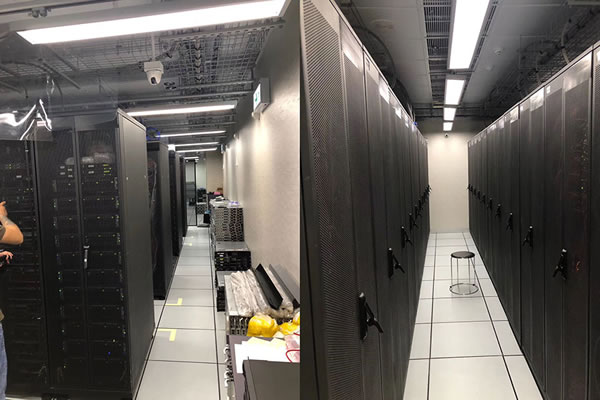
With the rapid development of information technology, the construction of network infrastructure is becoming increasingly important. As a leading telecom operator in China, South Korea's KT plays an important role in network services. This article will conduct an in-depth evaluation of the usage experience and performance of KT native IP in South Korea to help users better understand their advantages and disadvantages.
What is the Korean KT native IP?
Native IP refers to a way to directly use IP addresses for network communication. South Korea's native IP technology aims to provide more efficient network services. Compared with traditional network services, native IP performs better in latency, bandwidth and connection stability. By adopting an advanced network architecture, KT can provide users with faster download speeds and smoother online experiences.
User experience: connection speed and stability
In actual use, the connection speed of the Korean KT native IP is excellent. Users can feel a significant speed increase when downloading large files or watching videos. At the same time, KT's network stability has also been widely recognized by users. Whether during peak hours or when the network is busy, native IP can maintain relatively stable connections, reduce disconnection, and improve the overall user experience.
Performance evaluation: latency and bandwidth
Latency is one of the important factors affecting network performance. Through testing of the native IP of South Korea KT, it was found that its latency performance was relatively low, which is particularly important for applications such as online games and real-time video calls. In addition, KT's native IP is also excellent in bandwidth utilization, and can effectively support multiple devices to connect simultaneously, ensuring smooth use between devices.
User feedback: Advantages and shortcomings
Judging from user feedback, South Korea's KT native IP has received positive reviews in providing high-quality Internet services. Users generally believe that it is fast and has high stability, which is suitable for all kinds of network needs. However, some users also reported that in some areas, there may be insufficient network coverage, resulting in a decline in user experience. This suggests that KT still has room for improvement in expanding its network infrastructure.
Future development direction: technology optimization and user experience improvement
In order to further improve the user experience, South Korea's KT needs to continuously optimize its native IP technology. This includes strengthening network infrastructure construction, improving customer service response speed, and constantly updating technologies to meet future network needs. In addition, KT can also adjust service policies through user feedback to ensure that the needs of different users are met.
Summary and suggestions
Overall, South Korea's KT native IP performs excellently in network connection speed, stability and bandwidth utilization, and is suitable for a wide range of user groups. However, insufficient network coverage is still a problem that needs to be solved. It is recommended that KT continue to pay attention to user feedback, optimize network infrastructure, and improve service quality in its future development to meet users' growing network needs.
- Latest articles
- Purchase of CN2 servers in Singapore: Traffic billing and strategies for handling bursty bandwidth
- Long-term evaluation: Which Japanese server accelerators are the best? Comparison of multi-platform compatibility
- Cost Control: Comparison of Website Hosting Costs for Singapore Cloud Servers and Money-Saving Tips
- Comparison of Game Server Hosting Solutions and Analysis of Monthly Rental Prices for Thai VPS
- A comprehensive guide to hosting servers in Hong Kong: from regulations to technology
- Network optimization and latency control strategies for Vietnamese CN2 service providers serving e-commerce sites
- Practical Deployment and Cost Evaluation for Setting Up a Personal Encrypted Channel Using Hong Kong VPS SSR
- Analysis of Practical Applications of Japanese VPS in Accelerating Cross-Border E-commerce Platforms
- Instructions on Compatibility and Certification Requirements When Purchasing Japanese Original IPs for Integration with Third-Party Platforms
- Security Perspective: Comparison of Data Protection and Access Control for US Cloud Hosting and Cloud Servers
- Popular tags
-

price negotiation skills and long-term cooperation contract risk tips for renting server space in south korea
this article introduces price negotiation skills and long-term cooperation contract risk tips for renting server space in south korea, covering market research, demand definition, sla terms, legal and data sovereignty, trial and due diligence and other practical suggestions. -

summary of player experience and suggestions for using korean native ip games to avoid account bans and abnormalities
practical suggestions based on player experience, discussing how to reduce the risk of account bans and abnormal determinations when using native korean ips for gaming, and emphasizing the importance of compliance, account security, and official communication. -

korean kt game server maintenance cost estimation and monitoring system construction
this article provides professional analysis on the maintenance cost estimation and monitoring system construction of korean kt game servers, covering cost composition, operation and maintenance models, monitoring indicators and alarms, capacity planning and continuous optimization suggestions, and is suitable for decision-making and implementation reference.